
How to create the perfect bed
The first question I receive whenever anyone visits my home is how do you get your bed to look like this? The answer is many elements, which I will break down below.
As a teen, I was obsessed with the physics of a 'perfect' bed—the kind you see in high-end showrooms or a Nancy Meyers movie. They always looked impossibly cozy, yet every time I attempted the look myself, something was missing. It felt like a secret I wasn't privy to. Eventually, I sat down, peeled back the layers (literally, I gently took apart corners of a Pottery Barn showroom bed), and solved what felt like an algebraic equation for the kind of coziness that makes you want to catapult into it, like Kate Winslet in The Holiday.
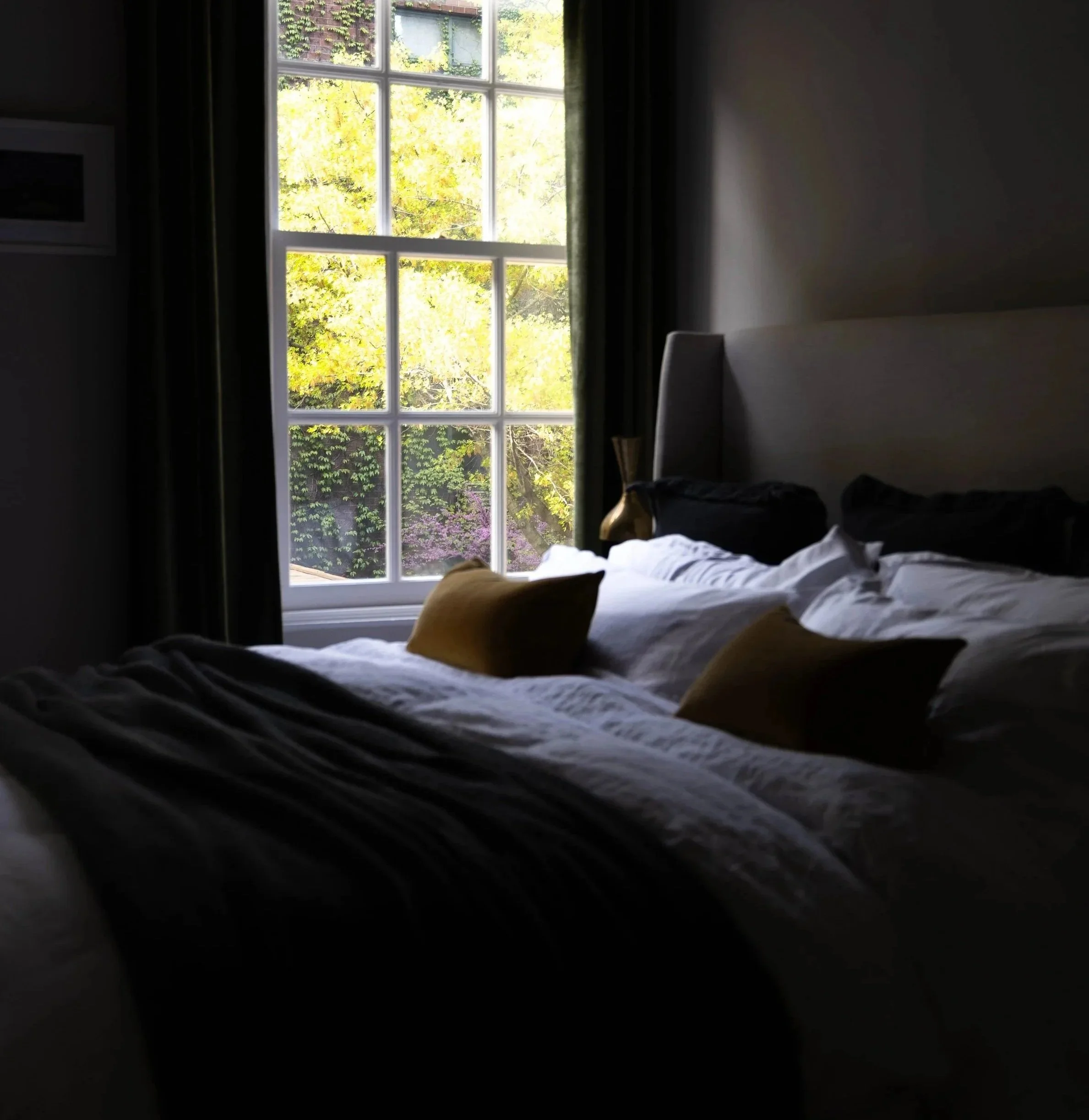
Layer 1: Double Down on the Duvet
'Double-Down'—the industry secret to a bed that looks like a cloud. You can either double-stuff a single cover for maximum 'pillowy-ness,' or opt for the dual-duvet system I use at home. By layering a second full duvet at the foot of the bed, you get the visual weight of a Nancy Meyers set with the flexibility of a real-life bedroom. While I’m a proponent of weighted sleep, stuffing two inserts into one cover can feel a bit extreme in the July heat—but if you’re a 'more is more' person, I certainly won't be the one to stop you.
When it comes to the "filling" stage of the equation, the density of your duvet is what determines the final silhouette of the bed. While lightweight inserts have their place for breathability, achieving that "lofty" look requires a medium-to-heavy-weight down or down alternative. This added heft is what creates those cinematic folds and ensures the duvet doesn't just lie flat against the mattress. A few of my favorite down inserts are Sferra, Everett Stunz(I don’t own one, but my best friend does, and she is the queen of a cozy bed),Royal Velvet.
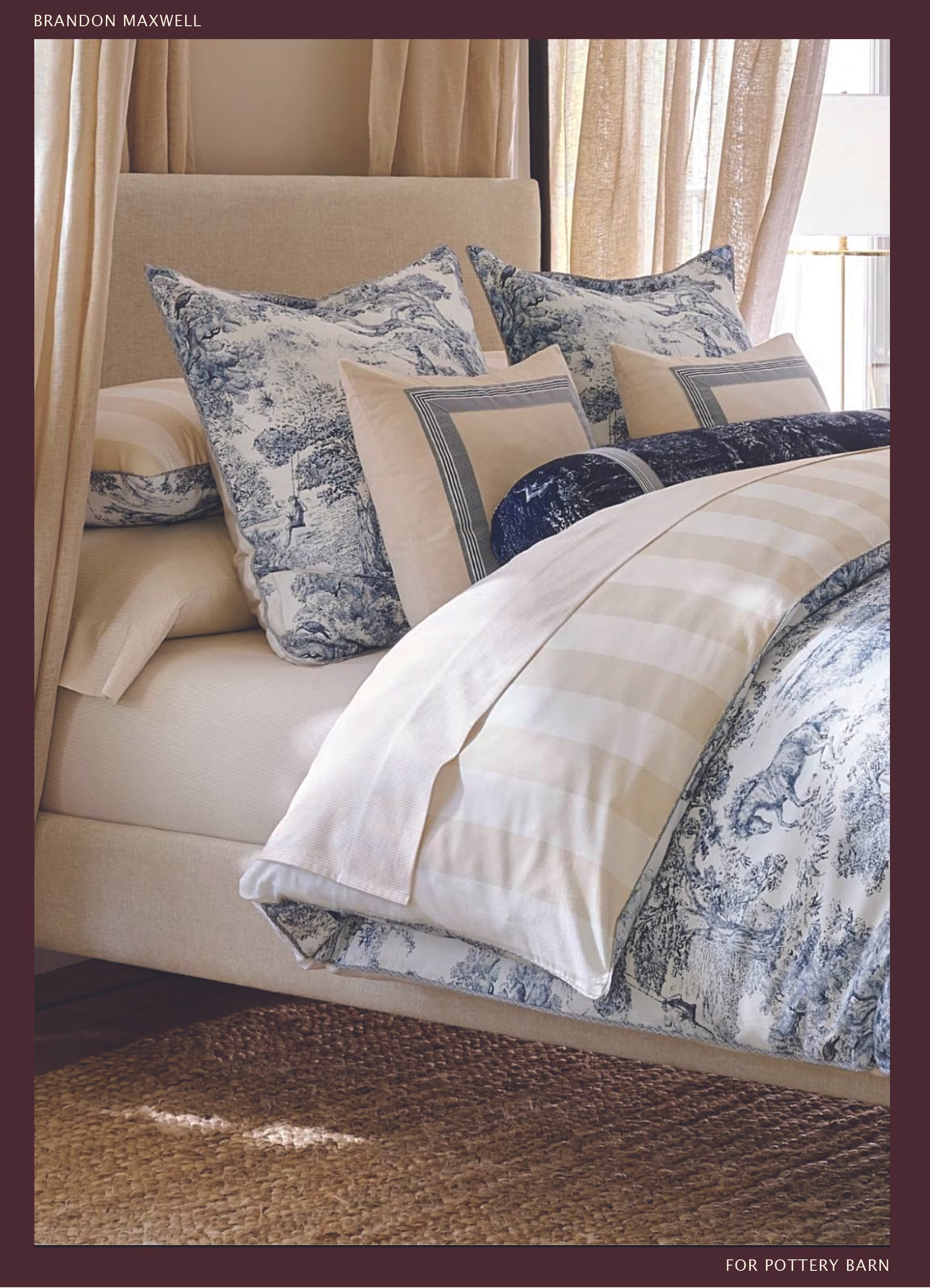
Layer 2: Pillows and lots of them
While the duvet handles the heavy lifting for 80% of the bed’s profile, the top 20% is where we curate the depth. I start with Euro pillows to provide verticality—either acting as a structured frame against the headboard or tossed in with that effortless, 'Leanne Ford' nonchalance. Next are the sleeping pillows: two on each side for a generous total of four. (Pro-tip: scale your pillows to your mattress—kings for a king, standards for a queen).
The final touch is the throw pillow, which I introduce as a textural ‘counterpoint’ to the bed linens. Whether it’s a pop of pattern or the richness of suede, it’s the unexpected material that makes the bed feel like a curated space rather than a showroom floor. My go-to down pillows are Royal Velvet (I’ve been using these for years, and they have held up very well) and the gold standard, Sferra, which often goes on sale at Bloomingdale’s!
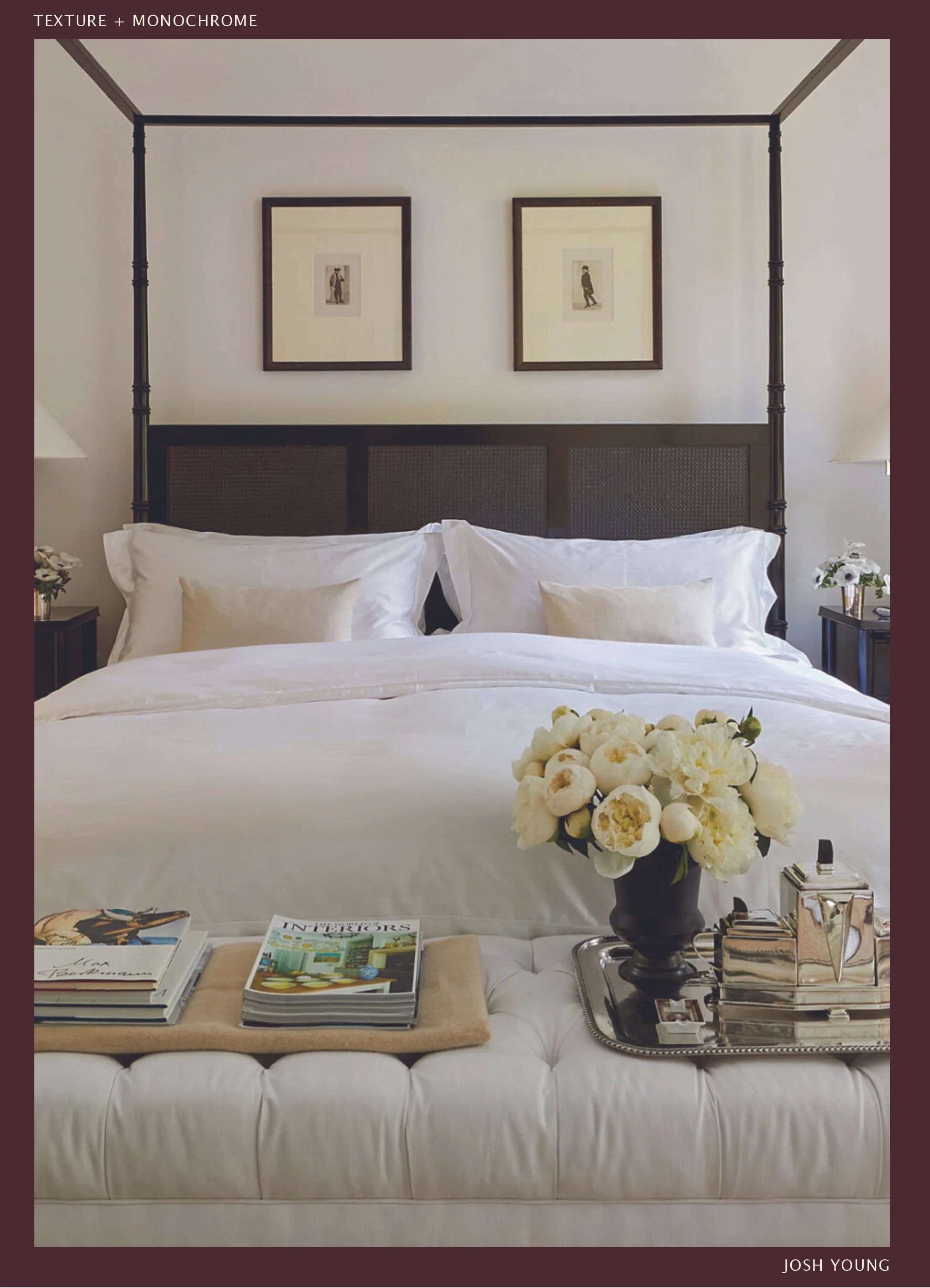
Layer 3: Oversized Throw
An oversized knit blanket, whether spilling off the end or bunched across the foot of the bed, adds an essential layer of dimension. For those who aren’t into a high pillow count, this is your secret weapon: you can still achieve that signature Nancy Meyers coziness by leaning into the heavy, tactile weight of a textured throw that builds visual depth and warmth through a single, oversized texture rather than a mountain of shams.
Consider a velvet quilt to add sheen and depth, or a chunky oversized knit similar to the one on my bed, creating movement and lots of cozy texture.
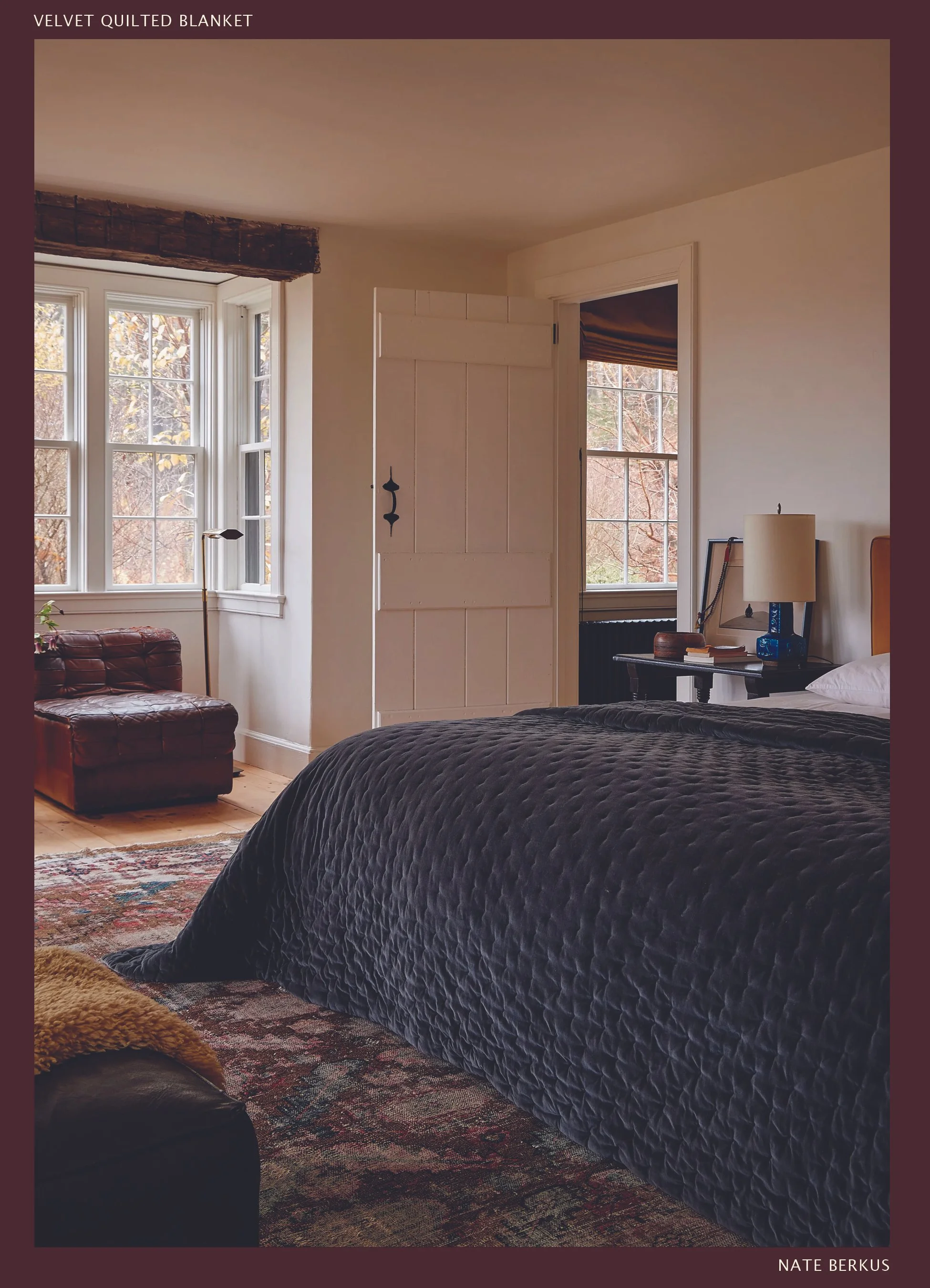
Layer 4: Textures
While I’ve touched on texture throughout the layers, it deserves its own line in the equation. For a bed that feels curated, follow the Rule of Three: vary the materials of your sheets, your duvet, and your accent touches like the blanket and throw pillows. A single-fabric bed leans toward a modern minimalism—and if you’ve made it this far in the column, I think we both know that isn’t the soul you’re chasing.
Consider accent pillows like the jacquard cover or velveteen lumbar or my favorite solid velvet throw pillows (which I have on my bed).
Until the next measure,
Kelly